
Everyone wants to be happy.
We chase it in different ways — money, success, recognition, possessions, comfort. We tell ourselves, “Once I achieve this, I’ll be happy.” But years pass, goals change, and happiness often feels temporary or incomplete.
So what really makes people happy?
Interestingly, one of the clearest answers comes not from philosophy or self-help trends, but from one of the longest scientific studies ever conducted on human life.
Visit Rajamanickam.Com to get an AI course and Books with a discount using the coupon code QPT
What an 80+ Year Harvard Study Reveals About Happiness
In 1938, Harvard University began a unique research project known today as the Harvard Study of Adult Development. Researchers followed hundreds of people for more than eight decades, studying their health, careers, relationships, failures, successes, and emotional wellbeing.
After all these years, the conclusion was surprisingly simple:
Good relationships keep us happier and healthier. Period.
Not money.
Not fame.
Not intelligence or social status.
People who had warm, supportive relationships lived longer, stayed healthier, and felt more satisfied with their lives.
Relationships: The Strongest Foundation of Happiness
Quality Matters More Than Quantity
Happiness does not depend on how many people you know, but on how deeply you are connected to a few.
- A caring spouse or partner
- A close friend who listens
- Family members who support you
- A sense of belonging in a community
These connections act as emotional anchors during difficult times.
Relationships Protect Both Mind and Body
The study found something remarkable:
- People who were satisfied with their relationships in mid-life were healthier decades later.
- Loneliness increased the risk of illness and early death.
- Emotional connection mattered more than cholesterol levels or physical strength.
In simple words: loneliness slowly harms us, while connection quietly heals us.
Conflict Is Normal — Repair Is What Matters
Happy relationships are not free from problems. Disagreements are natural. What makes the difference is how people handle them.
- Do they communicate openly?
- Do they apologize and repair?
- Do they show respect even during conflict?
Relationships that survive and grow are those where people choose understanding over ego.
Gratitude: The Quiet Power Behind Lasting Happiness
If relationships are the foundation of happiness, gratitude is the habit that strengthens it.
Gratitude is not about pretending everything is perfect. It is about recognizing the good that already exists, even in imperfect lives.
How Gratitude Changes the Mind
When you practice gratitude regularly:
- Your focus shifts from what you lack to what you have
- Stress and negative thinking reduce
- You experience more calm and contentment
Over time, your brain learns to notice positive moments naturally.
Gratitude Strengthens Relationships
Expressing gratitude makes people feel seen and valued.
A simple:
- “Thank you for being there”
- “I appreciate what you did”
- “I’m grateful for you”
can deepen bonds and create emotional closeness.
Gratitude turns ordinary interactions into meaningful connections.
Gratitude Improves Health and Wellbeing
Research shows that grateful people often experience:
- Better sleep
- Lower stress
- Improved emotional resilience
- Greater life satisfaction
Gratitude is like mental nourishment — small, simple, but powerful.
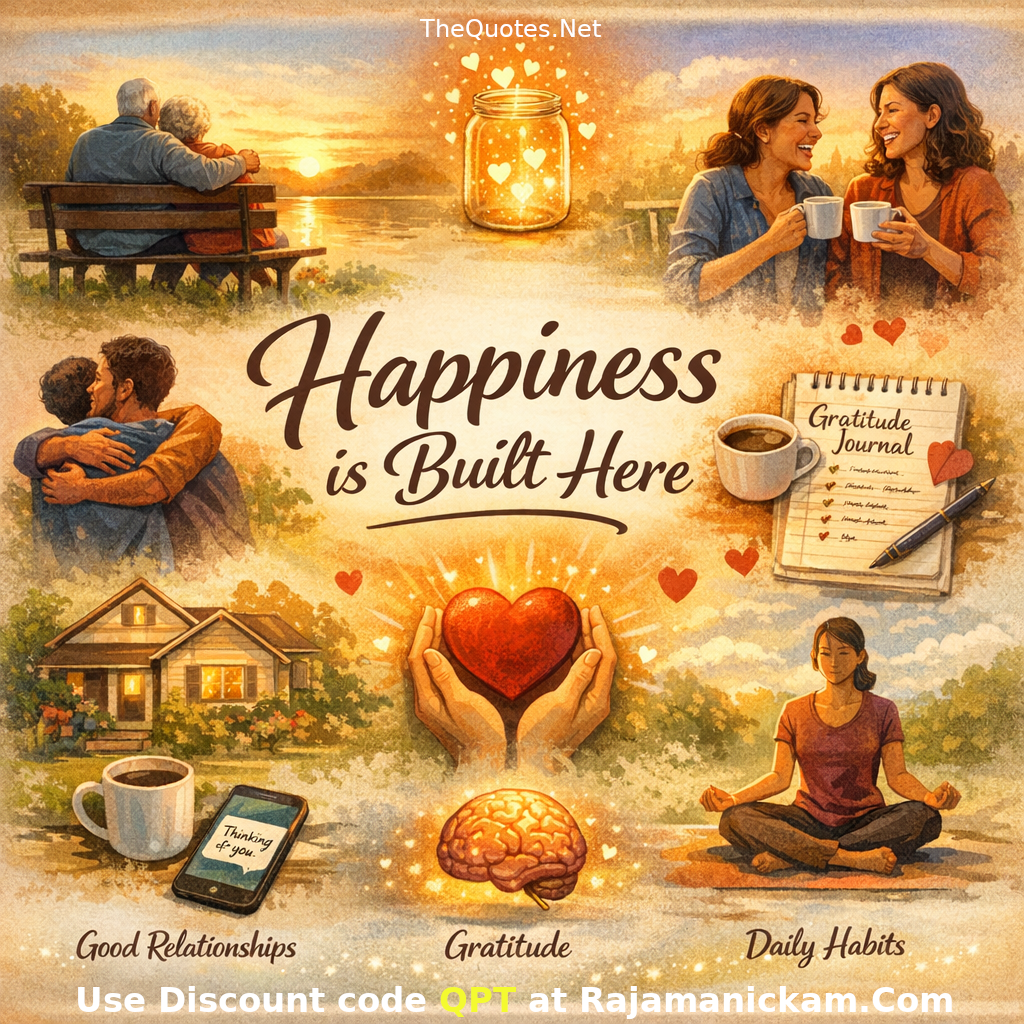
Happiness Is Built Through Daily Habits
Happiness is not a single achievement. It is the result of small choices repeated every day.
Here are simple habits anyone can practice:
1. Invest Time in People
Send a message. Make a call. Listen without distraction.
Time spent with loved ones is never wasted.
2. Express Appreciation
Say thank you — often and sincerely.
Never assume people already know they matter.
3. Be Present
Put the phone away. Be fully there in conversations.
Presence is a rare and precious gift.
4. Practice Daily Gratitude
At the end of the day, reflect on:
- One good moment
- One person you appreciate
- One thing you learned
This small habit rewires your outlook on life.
Redefining Success and Happiness
Modern life often teaches us that success leads to happiness.
But research and life experience suggest the opposite:
Healthy relationships and gratitude create happiness — and happiness supports success.
When you are emotionally supported and mentally peaceful, you handle challenges better, work more meaningfully, and live more fully.
A Gentle Reminder
You don’t need a perfect life to be happy.
You need:
- People who care
- Moments of appreciation
- A grateful heart
- And the willingness to nurture what truly matters
Happiness grows quietly, in conversations, shared meals, kind words, forgiveness, and gratitude.
Final Thought
At the end of life, people rarely regret working less.
They regret not loving more, not connecting more, and not appreciating what they had.
So invest in relationships.
Practice gratitude.
Live with awareness.
Because happiness is not something you chase — it is something you build.