Raising emotionally strong children is one of the most valuable responsibilities of parenting. Emotional strength helps children understand their feelings, face challenges with confidence, and build healthy relationships. In a world full of pressure and change, emotionally resilient children are better prepared to cope, adapt, and thrive.
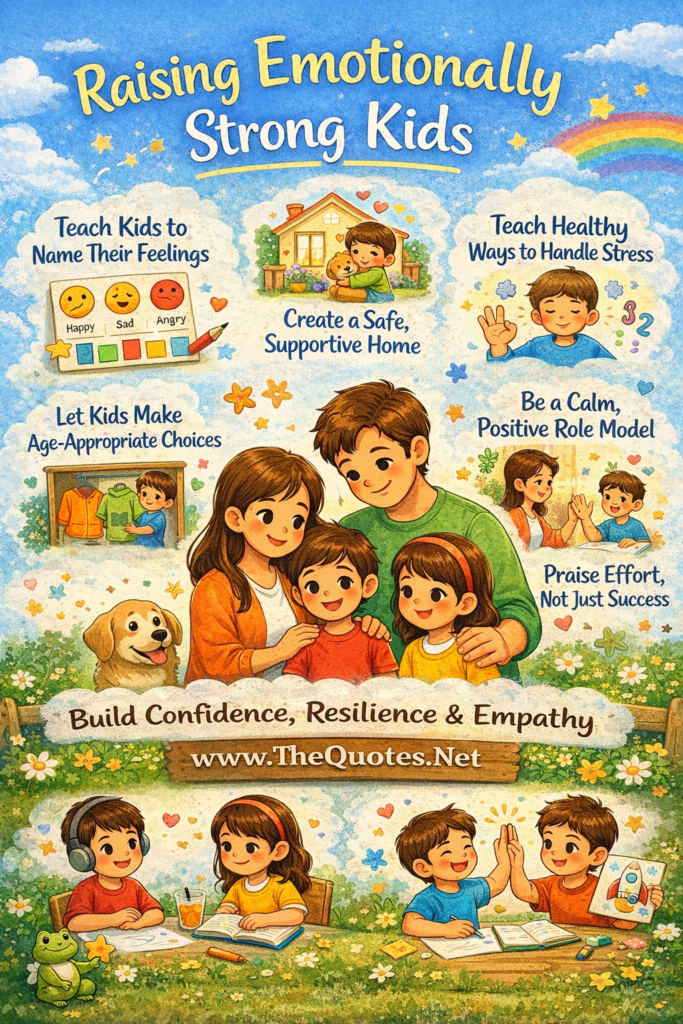
What Does Emotional Strength Mean?
Emotionally strong children are not those who never cry or feel upset. They are children who:
- Understand and express their emotions
- Handle stress and disappointment
- Show empathy and self-control
- Believe in themselves, even during difficulties
Emotional strength is about awareness, resilience, and balance.
Help Children Identify and Express Emotions
Children need guidance to understand what they feel.
You can support them by:
- Naming emotions: happy, sad, angry, frustrated
- Letting them know all feelings are normal
- Encouraging them to talk instead of suppressing emotions
When children learn to express feelings, they feel lighter and more confident.
Create a Safe and Supportive Environment
Children become emotionally strong when they feel safe at home.
Build this safety by:
- Listening without judgement
- Avoiding ridicule or harsh criticism
- Offering comfort during emotional moments
A secure environment allows children to open up without fear.
Teach Healthy Ways to Handle Stress
Instead of protecting children from every problem, teach them how to cope.
Help them learn to:
- Take deep breaths when upset
- Pause before reacting
- Find solutions calmly
These skills help children manage emotions independently as they grow.
Encourage Independence and Decision-Making
Allowing children to make age-appropriate choices builds confidence.
Simple opportunities include:
- Choosing clothes or activities
- Solving small problems on their own
- Learning from mistakes
Independence strengthens emotional resilience.
Be a Positive Role Model
Children learn emotional behavior by watching adults.
Show them how to:
- Stay calm during stress
- Express emotions respectfully
- Apologize and forgive
Your reactions teach them how to handle their own emotions.
Praise Effort, Not Just Outcomes
Focusing only on success can create fear of failure.
Instead:
- Praise effort and perseverance
- Encourage trying again after failure
- Celebrate progress
This builds a strong inner belief system.
Final Thoughts
Raising emotionally strong kids is not about raising perfect children—it’s about raising aware, confident, and resilient ones. With patience, understanding, and consistent support, parents can help children develop emotional strength that lasts a lifetime.
Emotionally strong children grow into emotionally healthy adults—and that is a gift beyond measure.